


 Here along the Emerald Coast we have a opportunity for some of the most exciting fishing you'll ever do. While we catch cobia all year when bottom fishing, during the spring the cobia migrate along the coast in the shallows heading to the Louisiana delta to spawn from March to mid-May, and some years until June. Most of the cobia are caught after sight-casting on the fish as they migrate by in 10ft to 60ft of water. The emerald green water makes this exciting fishery possible.
 How and where
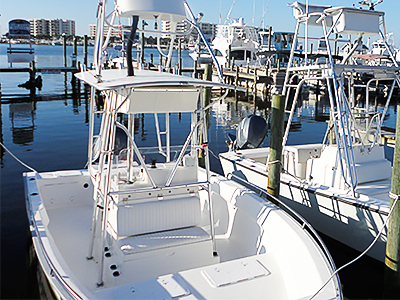
Most of the cobia are caught by fisherman in boats with a cobia/tuna tower. While you don’t have to have a tower it sure makes it easier to spot the fish. Having steering in the tower also adds to how many fish you catch as everything you do takes less time than when you only have one person down below driving and another in the tower spotting fish and yelling directions. Other places and ways of catching them that we'll cover is pier fishing, surf fishing, and kayak fishing.
Unlike most fishing trips that start at the crack of dawn, when fishing from a boat most people head out mid-morning and fish until late afternoon. You need the sun to be up in the sky so the glare on the water is not as bad. We’ll spot most of the cobia before we ever catch one.
Head out of the pass and start fishing to the west in the morning. This way the morning sun will be at your back making the glare not such a big deal. Fish go west until mid-day or early afternoon. At mid-day you can start fishing your way back home and the sun will begin setting in the west, once again getting the sun at your back and reducing glare.
When heading to the west remember you are going in the same direction as the fish so you'll need to be going fast enough to overtake the fish. One you start fishing back to the east you'll be running head on into the oncoming fish, so you need to slow down. Things happen very fast when the fish are coming at you and they are easy to run over or spook them off.
Once you spot the fish, given you have seen one from far enough away, attempt to get the fish between you and the shore line. This way, if you do spook the fish, hopefully you'll scare it when he goes into the shallow water closer to the beach and will be easier to keep track of it. You want to cast close enough for it to see you bait but not so close as to scare it.
 Most people like to look for cobia along the sand bar where the water is the bright emerald green and the fish are easier to see. Personally, I like to fish the deeper water where the water is just starting to turn blue. I find that the fish I see here are much more likely to bite. Less people are looking in the deeper water because the fish are harder to see, and if you do spook it and he goes down you can no longer see it on the bottom and need to use all your skills to relocate your fish.
If you are fishing in the deeper water and spot a fish and it goes down, don’t panic! The fish has a mission, and that is to migrate. In most cases, if you knock it off his path it’ll head a little offshore and then head back on its mission. Go about a 1/4 mile down the beach, at 1/4 mile offshore of the depth you were at, point the boat back to the east, and just start looking. You'll probably relocate your fish. If you don’t see it, try the same technique again.
Cobia are scavengers for the most part and will follow along with sharks, turtles, and rays that are also cruising the beaches. Cobia often hang out around the mouth of the pass especially on the outgoing tide and will hang out around buoys and FADS.
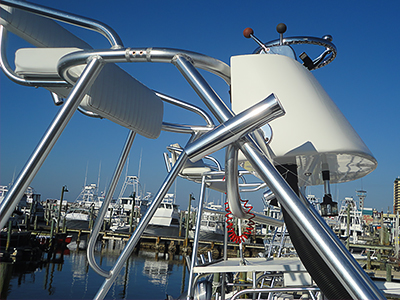 Having your boat set up properly with a good tower and controls is essential; a few other things are also important. Having a forward-facing rod holder on both sides of the tower sure makes in nice for when you spot a cobia. Your rods will ready and you don’t have to take your eyes off the fish. I like to have a rod that I am holding at the ready with a cobia jig. The two forward-facing rods need live eels rigged sitting in a bucket with cool water. Then, in the rocket launcher on the back of the tower, I like to have several rods with choices to throw at the cobia in case they don’t like my first offering.
The best days are when we have warmer temps, the wind is from the southeast or south and the current running from west to east. Many people will say that it is better to have a current from the east, which is somewhat true. The cobia are migrating and are looking to conserve energy so when the wind is easterly and the current is going east to west it is just as easy for the cobia to be on the bottom as it is on the surface. When the wind is easterly and the current on the bottom is going east to west, it is much easier for the cobia to swim at the surface and that’s better for us as we try and spot them swimming along. [back to top]
Sunglasses and hat
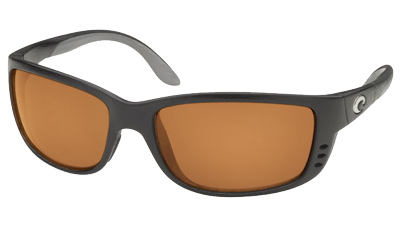 Some basic things most people never think about when heading out to sight-cast for any species, whether it be cobia, redfish of pompano, is having the right pair of sunglasses and the right hat. If you can’t cut the glare off the water you chances of spotting a fish are slim.
A good pair of polarized glasses is a must. While there are some inexpensive glasses starting at $20, a good pair of Costa Del Mar glasses will make a huge difference. The difference between a $20 pair of glasses and even a regular pair of Costa Del Mar glasses compared to a pair of Costa Del Mar 580 lenses is definition. Think of it like pixels on a computer screen or watching football in hi-definition. The better the definition of the lenses on your sunglass, the more fish you'll see and this even comes more into play if you’re pier fishing or do not have a tower on your boat. Glasses with amber lenses are best for spotting fish.
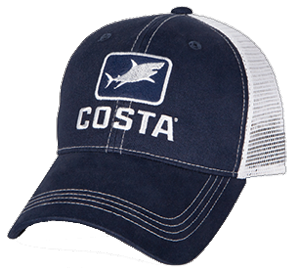 After sunglass come the right hat. You may ask if any hat will work, and the answer is yes, but if you have a hat that is dark under the brim this will help in shading your eyes. Having the darker color under the brim makes a big difference over having a light colored brim. [back to top]
Tackle
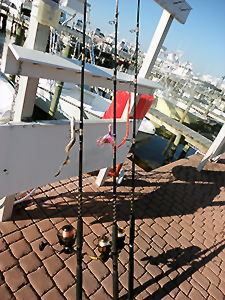 For most fisherman, a 7ft or 9ft medium-heavy to heavy setup is best. Having a rod that is more medium is better when throwing live baits and a stiffer rod is required when throwing lures. A cobia mouth is very hard and most lures have a large offshore style hook. Getting this hook set in the fish is very difficult if the rod is too soft.
Rods
Reels
There are many good cobia reels on the market. What you are looking for is a reel that can standup to the pressure needed for cobia fishing, one that has a very smooth drag, and one that holds at least 200yds of 30lb mono fishing line or 300yds of 30lb to 65lb braided line.

Shimano Spheros
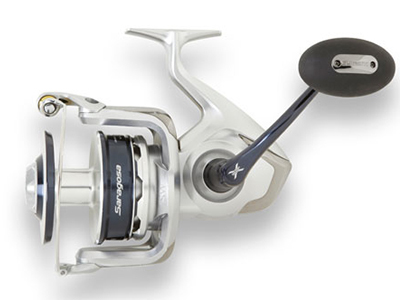
Shimano Saragoosa

Shimano Stradic
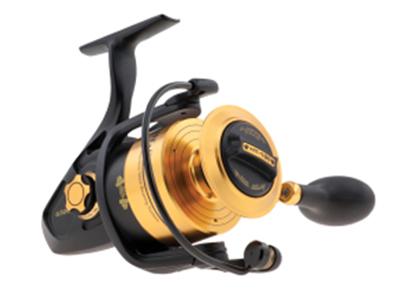
Penn Spinfisher

Van Staal
The
Fishing line
 I am a huge fan of braided line for most types of fishing but for cobia I prefer mono line; specifically Ande 30lb pink mono. The way a cobia fights and the way he runs, I seem to break off or pull the hook when fishing with braid more so than with mono. When I do fish braid, I tend to use a lighter than normal rod so the rod acts as a shock absorber because the braid has no stretch. [back to top]
Cobia lures
When throwing lures my first choice has always been a jig. However, since the Savage Eel came out it has been the go-to choice. Lures should be rigged on 60lb leader about 18 inches long with a 150lb swivel. When using a cobia jig, start the year off with pink and white combinations because of the amount of squid around, in mid season switch to the chartreuse and orange combo, and the more chartreuse and green lat in the season.

Savage eel

Cobia tube lure

Braid popper

Hand-tied cobia jig

Regular cobia jigs
Live baits
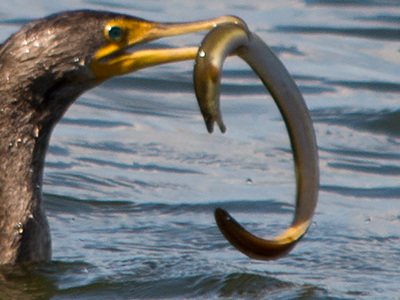 Live eels are the first bait of choice for most anglers because you can buy them, they live very well, and you don’t have to catch them yourself.
When fishing live eels make sure to bring some sand or paper towels. Eels are very slimy! When you dip one out of the live well, wet your hand and dip it into the sand you brought or us a paper towel to give you the grip required to hold onto a eel long enough to get hooked and ready. You have about 8 seconds to get the eel hooked and ready before you need another paper towel or more sand.
Eels love to tangle your rig once you hook them. Have a 5 gallon bucket with mostly saltwater and just a touch of ice to calm them down a bit. Do not use so much ice in the bucket that it freezes the eels. Also, have a Dubro Release attached to the bucket to clip your line coming form the rod that is rigged and ready on the rod holder is nice. What is good about this is that you can have the line tight coming from the reel so it does not tangle, and the have the quick release to clip the line to on the bucket, thus have a tight line to your reel and have slack for the eel so he will not tangle so bad.
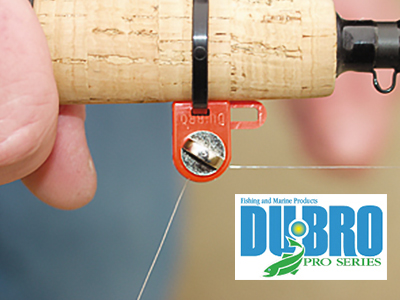 As you see in the picture, a Dubro clip is attached to the rod, but we would drill a small hole in the bucket we were going to use and have the clip attached there instead.
Other live baits include mullet, pinfish, mingo snapper, ruby lips, pigfish, and cigar minnows. Mullet are my go-to for a really big cobia. Prepare your mullet by cutting off one pectoral fin and the tip of the top fork on the tail of your mullet. When you cast it out, it can only swim on the surface and in a circle, only go one direction, and cannot swim down out of sight. Another favorite is a live pig fish, but these guys are hard to catch and will take time to find.Remember, you always want to have your live baits rigged before you spot a cobia and many times you don’t have time to try and get one from the live well, get it hooked, and cast before the cobia is gone.

Live mullet

Live pinfish

Live ruby lip

Live pigfish
Live bait rigs
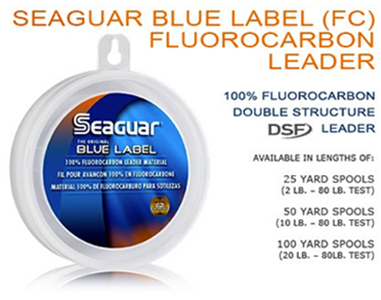
 I like a 60lb 18 inch leader. Regular mono work fine, but for picky fish or tournaments, or if you just what to increase your odds, use Seaguar Fluorocarbon. Most people use Owner Mutu Light 7/0 circle hooks or Owner 2/0 treble hooks. I like the circle hook myself. Just hook the eel in the back of the head, mullet in the lips, and the shoulders of other baits. Owner Mutu Light hooks work great because they have just a little offset. You can either set the hook traditionally or just point the rod at the fish, lift the rod and start reeling, and the fish will hook himself almost every time.
 Also, when fishing with live eels, they have a tendency to tangle your leader into a ball and this is much less likely when using a single hook over a treble. Also, it’s much easier to release an unwanted or undersized fish that is caught with a circle hook over a treble. [back to top]
Landing cobia
 Landing cobia requires the right gaff or net. If boat fishing, I recommend the Aftco 586H gaff or a Frabill cobia net. The net is especially good for releasing undersized fish or to make sure you tournament winning fish does not loose unwanted weight from bleeding out after being gaffed. I have seen many a tournament come down to ounces and the people that use these nets have an advantage. [back to top]
Pier fishing cobia
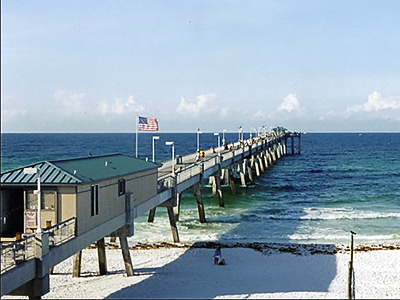 Pier fishing for cobia is much like boat fishing, with the exception that you’re waiting for the fish to come to you. Fish the east side of the pier between the sand bar and the end of the pier. Most of the piers play what we call First Shot. This means everyone is looking for the cobia, when someone spots one, they yell “First cast!” and point out the cobia. They get one cast to hook the fish. After that everyone else in turn gets to cast to try and catch it. Cobia jigs are the most popular pier baits. [back to top]
Surf fishing cobia
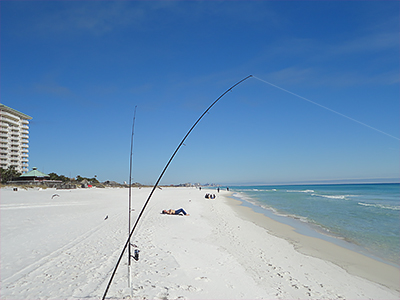 Cobia are mostly caught by sight-casting from the surf, but you can get them bottom fishing the surf with eels. Best chances to catch them from the surf are during the 3 days before and 3 days after the full moon in April and May. On these nights, when the full moon is out, the squid come to the beach to spawn (or at least that is what i think they do). The squid get in the shallows all night and the cobia come in very close to the beach to feed on them. They are also very close to the shore for the first few hours of daylight, which gives you extra chances to get one. [back to top]
Kayak fishing
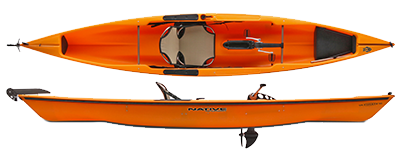 Your best chance is to launch your kayak off the beach and drift, then chum or troll just outside of the second sand bar. Again, we normally sight-cast for cobia and since you’ll have limited visibility from a kayak, you’ll have to rely on alternative methods. Drifting along with a live bait and a chum bag can be productive. Trolling a Yozuri will work for sure. Even better yet, venture out to one of the near shore wrecks and use the same tactics. This works even better just along the sand bar. [back to top]
This tip was provided by our own fishing expert Tim Broom, Half Hitch Destin. Get the PDF here:  GCSSS-Cobia.pdf
Storage Root/wysiwyg/products/69228500014.jpg


